

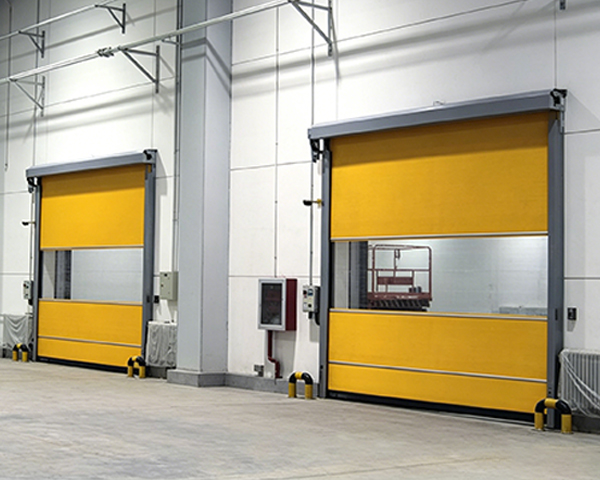
An Automated Flexible Gate for Smart Factory Applications is a modern access-control and material-flow solution designed to support the speed, safety, and connectivity required in advanced manufacturing environments. As smart factories continue to evolve with Industry 4.0 technologies, flexible automated gates are becoming essential components for managing people, vehicles, robots, and production logistics in a controlled and efficient way. These systems combine automation, sensing, connectivity, and adaptable mechanical design to create a reliable entry and exit solution for dynamic industrial spaces.
In a smart factory, every second matters. Production lines must move without interruption, safety must remain uncompromised, and equipment must communicate with broader digital systems. An automated flexible gate helps meet these needs by providing rapid access control, configurable opening behavior, durable construction, and integration with smart factory platforms such as MES, ERP, WMS, AGV fleets, and industrial IoT networks. This makes the automated flexible gate not only a physical barrier, but also an intelligent node in the factory ecosystem.
This article provides a detailed, SEO-friendly overview of automated flexible gate systems for smart factory applications, including definitions, core benefits, technical characteristics, common configurations, typical specifications, selection factors, and application scenarios. The content is written for use in blog posts, industry landing pages, directory pages, and product category pages, with an emphasis on industry-wide information and keyword-rich structure.
An automated flexible gate is a mechanized gate system that opens, closes, retracts, folds, slides, or swings automatically while adapting to changing operational requirements. Unlike traditional fixed gates, a flexible gate is designed to accommodate variable traffic patterns, multiple access modes, and integration with intelligent control systems. In smart factory applications, the gate may respond to sensors, access cards, vehicle presence, safety signals, or software commands from a centralized control platform.
The term flexible refers to both mechanical and operational adaptability. Mechanically, the gate may feature modular structures, adjustable width, configurable height, or a compact opening mechanism. Operationally, it can support different workflows such as employee entry, pallet movement, AGV passage, restricted access zones, clean room separation, or machine safety boundaries. This flexibility is critical in modern manufacturing environments where production layouts can change frequently.
In simple terms, an automated flexible gate is a smart factory access point built to be fast, safe, scalable, and easy to integrate. It supports efficient movement while maintaining security and compliance with industrial safety standards.
Smart factories rely on data-driven automation, interconnected devices, and high responsiveness. A gate system in this environment must do more than open and close. It should help optimize workflows, reduce manual labor, prevent unauthorized access, and synchronize with other automated systems. Automated flexible gates play an important role in achieving these goals.
In manufacturing facilities, access points often become bottlenecks. A poorly designed gate can slow down logistics, create safety risks, or interrupt production flow. An automated flexible gate helps solve these problems by enabling fast movement with controlled access. It can also be configured to support specific zones such as production areas, assembly sections, warehouse corridors, material handling lanes, and restricted maintenance spaces.
Another major reason these systems matter is their compatibility with Industry 4.0. Smart factories depend on real-time communication between machines, sensors, and control software. An automated flexible gate can be connected to these systems to trigger access events, log usage, track movement, improve traceability, and support predictive maintenance strategies.
| Advantage | Description | Smart Factory Benefit |
|---|---|---|
| Fast automated access | Opens and closes quickly with minimal delay | Improves workflow efficiency and reduces congestion |
| Flexible configuration | Supports different widths, heights, and control modes | Adapts to changing factory layouts and traffic patterns |
| Enhanced safety | Uses sensors and logic controls to detect obstacles or people | Reduces collision and injury risks |
| Smart integration | Connects with PLC, IoT, MES, or access-control systems | Enables synchronized factory automation |
| Durable industrial design | Built for continuous operation in demanding environments | Improves reliability and service life |
| Space efficiency | Designed to operate in narrow or high-traffic areas | Maximizes usable factory floor space |
| Better security | Restricts access to authorized personnel or vehicles | Supports industrial security and compliance |
| Low operational burden | Reduces manual gate handling and supervision needs | Lowers labor costs and improves consistency |
Automated flexible gates are used in many smart factory scenarios. Their design allows them to serve as both security barriers and workflow enablers. Below are some of the most common use cases in industrial environments.
Smart factories often require controlled entry for workers, contractors, and visitors. Automated flexible gates can be linked to badge readers, biometric systems, QR access, or identity management platforms. This ensures that only authorized personnel can enter specific zones.
In production and warehouse areas, gates help manage the movement of carts, forklifts, pallets, and containers. A flexible gate can open automatically when detected transport equipment approaches, improving material flow and reducing stoppages.
Automated guided vehicles (AGVs) and autonomous mobile robots (AMRs) are increasingly used in smart factories. Flexible gate systems can be synchronized with these vehicles to permit safe passage through designated lanes without manual intervention.
Some manufacturing environments require separation between clean and non-clean zones. Automated flexible gates can support pressure control, contamination control, and zoning requirements when integrated with environmental management systems.
Gates can act as dynamic boundaries around machines, robotic cells, or hazardous areas. When a gate is open, systems may trigger safety protocols. When closed, restricted access is restored automatically.
Smart factory logistics often depend on efficient movement between production and storage areas. Automated flexible gates can regulate loading docks, staging areas, and shipping lanes to support smooth operations.
The operation of an automated flexible gate typically involves four layers: sensing, control, actuation, and communication. These layers work together to provide safe, efficient, and intelligent gate performance.
| System Layer | Main Function | Common Components |
|---|---|---|
| Sensing | Detects presence, motion, obstacles, or access requests | Photoelectric sensors, radar, inductive sensors, RFID readers |
| Control | Processes inputs and applies opening/closing logic | PLC, microcontroller, industrial controller, access software |
| Actuation | Moves the gate mechanism | Motor, gearbox, actuator, drive unit, spring mechanism |
| Communication | Connects the gate to factory systems | Ethernet, CAN bus, Modbus, OPC UA, wireless interfaces |
When a person, vehicle, or robot approaches the gate, sensors detect the event and send a signal to the control unit. The controller then evaluates the access rules, safety conditions, and timing logic. If the request is valid, the actuation system opens the gate. After passage is complete, the gate returns to the closed position or another predefined state.
In advanced smart factory applications, the gate may also record access events, send alerts, track dwell time, and support remote monitoring dashboards. This turns a simple barrier into a data-generating automation asset.
Modern automated flexible gate systems are built with a combination of mechanical durability, electronic intelligence, and software compatibility. Important features often include the following:
Automated flexible gates come in several structural formats depending on the application, available space, and performance requirements. Choosing the right type is important for safety, efficiency, and long-term reliability.
| Gate Type | Description | Best Use Case |
|---|---|---|
| Sliding flexible gate | Moves horizontally along a track or guide system | Narrow corridors, perimeter access, warehouse lanes |
| Folding flexible gate | Collapses in sections for compact opening | Limited space, pedestrian and light vehicle zones |
| Retractable gate | Retracts into a housing or frame | Clean factory layouts and temporary access areas |
| Swing automated gate | Opens inward or outward using hinged motion | Simple access points, controlled entries |
| Barrier-style gate | Raises or lowers to regulate passage | Vehicle control, loading areas, security checkpoints |
| Modular safety gate | Can be reconfigured or extended with modular panels | Flexible production zones and robot cells |
The exact specifications of an automated flexible gate depend on the model, application environment, and integration requirements. However, most industrial systems are evaluated using a common set of technical parameters. The table below provides a general specification framework for smart factory applications.
| Specification | Typical Range / Options | Notes |
|---|---|---|
| Opening speed | 0.5 to 3.0 seconds | Depends on gate size and actuation type |
| Closing speed | 0.5 to 3.5 seconds | Can be adjusted for safety and traffic flow |
| Gate width | 600 mm to 6000 mm | Flexible by design and application |
| Gate height | 900 mm to 3000 mm | Varies by pedestrian or vehicle access |
| Power supply | 24V DC, 110V AC, 220V AC | Industrial power options vary by region |
| Control interface | PLC, relay, dry contact, network interface | Supports automation integration |
| Communication protocol | Modbus, TCP/IP, CAN, OPC UA, RS485 | Depends on system architecture |
| Operating temperature | -10°C to 50°C | Special versions may support wider ranges |
| Ingress protection | IP54 to IP67 | Higher protection suits harsh environments |
| Cycle life | 500,000 to 5,000,000 cycles | Depends on build quality and use intensity |
| Noise level | Low to moderate | Important for indoor factory operations |
| Safety sensors | Standard or optional | Photoelectric, radar, pressure, vision-based |
Material selection is a critical factor in automated flexible gate performance. Smart factories often operate continuously, so gate components must withstand repeated cycles, accidental contact, vibration, dust, moisture, and cleaning routines. Common construction materials include powder-coated steel, stainless steel, aluminum alloy, reinforced polymers, and industrial-grade composite parts.
Stainless steel is often preferred in environments that require corrosion resistance, hygiene, or frequent washdown. Aluminum is valued for its lighter weight and corrosion performance. Steel structures provide high rigidity and impact resistance, while composite panels can offer a balance of durability, insulation, and reduced weight. The choice depends on environmental conditions and performance expectations.
Mechanical components such as bearings, tracks, hinges, actuators, and mounting brackets should also be selected for industrial duty cycles. In smart factories, low-maintenance design is highly desirable because it helps reduce downtime and labor costs.
Safety is one of the most important topics in any automated gate deployment. In a smart factory, the gate must protect workers, equipment, and production processes while maintaining operational efficiency. Safety functions may include obstacle detection, emergency stop compatibility, soft-start and soft-stop motion, anti-pinch design, warning lights, acoustic alerts, and integration with machine safety circuits.
Depending on the region and application, automated flexible gates may need to align with industrial safety practices and access-control regulations. Common considerations include safe speed, fail-safe logic, emergency egress, lockout procedures, and integration with guard systems. When used near robots or moving machinery, the gate should be part of a larger risk assessment process.
A smart factory gate should never create a new hazard while solving an access problem. For that reason, safety engineering is just as important as automation capability.
One of the biggest advantages of an automated flexible gate for smart factory applications is its ability to integrate with digital systems. Rather than functioning as a standalone device, the gate becomes part of a connected infrastructure.
| Integrated System | Typical Function | Result in Smart Factory |
|---|---|---|
| PLC | Controls opening logic and interlocks | Reliable machine-level automation |
| SCADA | Monitors status and alarms | Centralized visibility and control |
| MES | Coordinates production-related access events | Improved process traceability |
| WMS | Manages logistics and warehouse flow | Better material movement efficiency |
| AGV/AMR system | Sends passage requests or route signals | Autonomous transport with fewer delays |
| Access control platform | Verifies identity and permission | Stronger security and compliance |
| IoT dashboard | Collects usage data and alerts | Data-driven maintenance and optimization |
Through these integrations, the gate can contribute to production analytics, maintenance planning, and operational reporting. This is especially valuable in factories that aim to improve OEE, reduce bottlenecks, and strengthen process traceability.
Choosing the right automated flexible gate requires balancing safety, speed, size, environment, and integration requirements. A gate that works well in one factory may not be ideal in another. The following criteria are commonly used in project planning.
In general, the best automated flexible gate is the one that fits the workflow, not just the opening size. Smart factory success depends on aligning the gate with operational logic, safety architecture, and digital infrastructure.
Automated flexible gates support the core objectives of Industry 4.0 by improving responsiveness, connectivity, and data use. They contribute to a more intelligent factory environment in several ways.
First, they reduce manual intervention. Instead of relying on staff to open or close barriers, the system responds automatically to authorized activity. This saves time and reduces errors. Second, they enhance traceability. Every access event can be logged, analyzed, and used for process optimization. Third, they improve operational flexibility. As production lines shift, gates can be adjusted or reprogrammed to fit new layouts and workflows.
Fourth, they support safety and security simultaneously. In a smart factory, these goals are not separate. Protected zones, machine cells, and logistics paths all require controlled access without slowing productivity. Fifth, they enable predictive maintenance when connected to diagnostic systems. By tracking cycles, motor load, and error patterns, the system can warn operators before failure occurs.
Reliability is essential for any automated flexible gate used in a smart factory. Since access points may operate hundreds or thousands of times per day, the system must be designed for long-term endurance. Maintenance usually focuses on cleaning sensors, checking alignment, inspecting wear components, verifying software settings, and testing emergency functions.
A good industrial gate should have easily serviceable parts, clear diagnostic indicators, and stable mechanical motion. Preventive maintenance is often more cost-effective than emergency repair, especially in high-output manufacturing environments where downtime can affect delivery schedules and production targets.
Smart monitoring can improve reliability even further. By collecting cycle counts, alarm data, motor performance information, and environmental readings, factory teams can schedule maintenance based on actual usage instead of fixed intervals alone.
For content strategy and search visibility, the following keyword themes are commonly associated with this topic. They can be used naturally in blog posts, category pages, and industrial landing pages.
| Primary Keywords | Supporting Keywords | Search Intent |
|---|---|---|
| automated flexible gate | smart factory gate, industrial access gate, flexible automated gate | Product and solution discovery |
| smart factory applications | Industry 4.0 gate, factory automation access, connected manufacturing | Use case and industry relevance |
| industrial gate system | access control gate, automated barrier, production area gate | Technical and operational search intent |
| automated access control | factory entry system, secure gate automation, logistics gate | Security-focused intent |
| flexible gate for factory | modular gate, adaptable gate system, smart industrial barrier | Application-specific intent |
To support SEO performance, content should use these terms naturally in headings, subheadings, intro paragraphs, image alt text, and supporting descriptions. However, keyword stuffing should be avoided. High-quality structure, clarity, and useful information remain the most important ranking factors.
They are suitable for many, but not all, smart factories. The best fit depends on traffic type, environmental conditions, safety requirements, and integration needs. Pedestrian zones, logistics lanes, robot routes, and controlled access areas are all common applications.
Yes. In many smart factory environments, automated flexible gates are designed to communicate with AGV and AMR systems so that autonomous vehicles can pass safely and efficiently.
A flexible gate is designed for higher adaptability in layout, operation, and integration. It is typically better suited to industrial environments where access patterns change frequently and smart control is required.
Not usually. Industrial gate systems are often built for low-maintenance operation, especially when paired with sensors, diagnostics, and preventive maintenance planning.
Yes. By controlling access to specific areas and logging usage, automated flexible gates can significantly strengthen industrial security while supporting efficient workflow.
An Automated Flexible Gate for Smart Factory Applications is a valuable component of modern manufacturing infrastructure. It supports controlled access, operational speed, safety, and digital connectivity in environments where efficiency and adaptability are essential. By combining automation, sensing, durability, and smart integration, these gates help factories manage people, machines, and materials more intelligently.
Whether used for employee entry, AGV passage, material handling, safety zoning, or warehouse access, an automated flexible gate provides a practical solution for Industry 4.0 environments. Its ability to integrate with PLCs, IoT systems, MES platforms, and access-control tools makes it a strong fit for smart factory applications that demand both reliability and flexibility.
For businesses and industrial content creators looking to build SEO-friendly pages, this topic offers strong search relevance, clear informational structure, and high commercial intent. A well-written automated flexible gate page can attract traffic from manufacturing planners, automation engineers, facility managers, and industrial buyers seeking modern access-control solutions.
```
Thẩm Dương Manlong Metal Products Co., Ltd.


Bản quyền © 2026 Thẩm Dương Manlong Metal Products Co., Ltd. Bảo lưu mọi quyền Ứng dụng
Trang web này sử dụng cookie để đảm bảo bạn có được trải nghiệm tốt nhất trên trang web của chúng tôi.

 English
 Español
 Portugues
 Pусский
 Français
 Deutsch
 العربية
 ไทย
ไทย Türk dili



 Điện thoại
Bình luận
(0)