

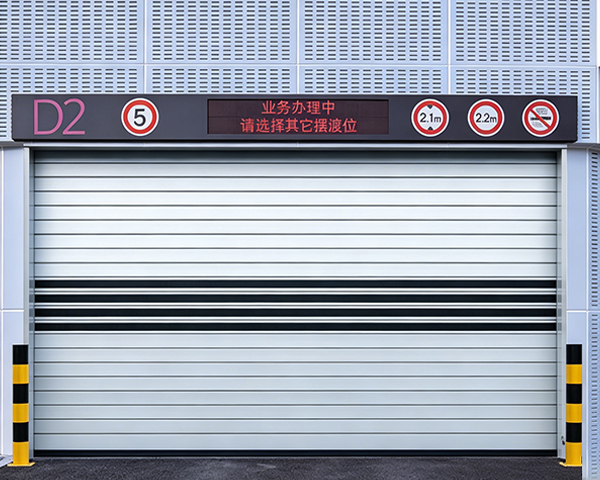
Rapid stacking door systems for industrial warehouses are a high-performance entrance solution designed to improve traffic flow, safety, insulation, and operational efficiency in demanding commercial and logistics environments. Unlike standard industrial doors, a rapid stacking door opens and closes quickly while the curtain or flexible panel stacks neatly upward, reducing obstruction and helping facilities maintain productive movement of goods, vehicles, and personnel. For warehouses, distribution centers, manufacturing plants, cold storage facilities, loading docks, and large storage buildings, this type of door can play an important role in controlling temperature, minimizing energy loss, and supporting high-cycle daily operations.
As industrial facilities continue to prioritize speed, reliability, and energy savings, rapid stacking door systems have become a practical choice for sites that need frequent access without sacrificing environmental control. These doors are often selected where space is limited, where forklift traffic is constant, or where clean internal conditions must be preserved. Because they are engineered for industrial use, rapid stacking door systems combine durable materials, advanced control mechanisms, and safety features to meet the operational demands of modern warehouse logistics.
This guide provides a detailed overview of rapid stacking door systems for industrial warehouses, including definitions, core benefits, common applications, typical specifications, key components, material options, selection criteria, maintenance considerations, and SEO-friendly industry terminology. The information below is written for use in blog posts, directory pages, category pages, and industrial product landing pages.
A rapid stacking door system is an industrial door designed to open quickly and stack its door curtain or panels in an organized vertical arrangement, usually above the opening. The “stacking” action allows the door to clear the doorway efficiently while keeping the mechanism compact and suitable for large warehouse openings. These systems are commonly used in areas requiring high traffic frequency, temperature separation, and improved workflow efficiency.
In industrial warehouse environments, rapid stacking door systems are valued because they provide a balance between speed, durability, and control. The door can help separate internal zones, limit dust movement, reduce drafts, and maintain a more stable interior climate. Many facilities use them as internal partition doors, external loading bay doors, or access points between production and storage areas.
Compared with conventional sectional doors or slow-opening industrial doors, rapid stacking door systems are designed for higher cycle counts and faster response times. This makes them especially useful in warehouse operations where delays at doorways can interrupt logistics, increase energy consumption, and reduce productivity.
Warehouses are highly dynamic environments. Forklifts, pallet jacks, conveyor systems, workers, and transport vehicles all move through the building throughout the day. Every second spent waiting for a door to open or close can affect throughput. A rapid stacking door system helps reduce bottlenecks and supports smoother operations.
There are several reasons these door systems are increasingly used in industrial warehouses:
For warehouse operators, these advantages can translate into measurable improvements in productivity and facility performance. That is why rapid stacking door systems are often considered a strategic infrastructure component rather than just a building accessory.
Rapid stacking door systems typically operate through a powered opening mechanism that lifts and stacks flexible curtain sections or rigid panels into a compact arrangement. The door moves vertically in a controlled path, creating a clear opening for vehicles or personnel. Depending on the design, the system may use belts, cables, motors, guide rails, and control units to achieve consistent motion.
The opening cycle is usually triggered by push buttons, remote controls, radar sensors, loop detectors, pull cords, access systems, or building automation controls. Once activated, the door opens quickly, allowing access while minimizing waiting time. When the passage is complete, the door closes rapidly to restore separation between areas.
The system is often engineered with safety and reliability in mind. Modern rapid stacking door systems can include light curtains, photoelectric sensors, emergency release features, soft bottom edges, obstacle detection, and manual override mechanisms. These elements help reduce the risk of accidents and support uninterrupted operation in busy warehouse settings.
Warehouse operations depend on fast, predictable movement. A rapid stacking door system reduces downtime at entry points and helps keep vehicles and workers moving efficiently. This is especially valuable in high-frequency access areas such as loading bays, internal transfer corridors, and production-to-storage routes.
Industrial warehouses often need to maintain a specific climate, whether for general storage, food logistics, cold chain applications, or sensitive inventory. Rapid closing reduces the time the opening remains exposed, helping prevent heat loss, cold loss, and unwanted air infiltration.
Because the door opens and closes quickly, heating and cooling systems do not need to compensate as heavily for temperature fluctuations. Over time, this can support energy-efficient building management and lower operating costs.
Warehouses handling powders, packaging materials, electronics, pharmaceuticals, or food products may need separation from dust and airborne particles. A rapid stacking door creates a better internal barrier and can help maintain cleaner conditions between zones.
Unlike some door types that swing outward or require large side clearances, a stacking door system keeps the movement path compact. This helps preserve usable floor space and supports better traffic design inside the warehouse.
Industrial warehouse doors are often opened hundreds of times per day. Rapid stacking systems are intended for this kind of repeated use, with durable construction and components selected for long service life.
Advanced control options make it easier to manage who enters and exits the warehouse. Integration with access systems can support restricted zones, security protocols, and better operational oversight.
Rapid stacking door systems are used in many warehouse and logistics applications. The most common use cases include:
In each of these settings, the rapid stacking door system supports movement while helping the facility maintain better control over environmental conditions and operational flow.
A rapid stacking door system for industrial warehouses is usually made up of several key components. Understanding these parts helps facility managers evaluate performance, maintenance needs, and specifications.
| Component | Function | Common Materials / Options |
|---|---|---|
| Door Curtain or Panels | Forms the main barrier and stacks during opening | PVC, reinforced fabric, aluminum, insulated composite |
| Guide Rails | Directs door movement and supports alignment | Galvanized steel, powder-coated steel, stainless steel |
| Drive Unit / Motor | Powers the opening and closing operation | Industrial electric motor, gearbox system |
| Control Panel | Manages door logic, settings, and safety inputs | Electronic control box with programmable functions |
| Safety Sensors | Detects movement or obstructions | Photo eyes, light curtains, radar sensors |
| Bottom Edge / Seal | Improves closure and reduces gaps | Flexible rubber, reinforced sealing profile |
| Structural Frame | Supports the entire door assembly | Steel frame, corrosion-resistant finish |
| Manual Release System | Allows operation during power loss or maintenance | Mechanical override or emergency release device |
The choice of material affects insulation, durability, visibility, maintenance, and cost. Rapid stacking door systems can be built from several industrial-grade materials depending on warehouse requirements.
PVC and reinforced fabric are common in rapid door applications because they are lightweight, flexible, and capable of fast movement. These materials are often used when quick cycling and basic environmental separation are the main priorities. They may also allow transparent sections for visibility.
Aluminum offers a balance of strength and low weight. It is often used where corrosion resistance and a more rigid door surface are desired. Aluminum-based systems can be suitable for industrial warehouses that need durability with moderate insulation performance.
Steel provides strong impact resistance and structural reliability. It is frequently used in frames, guide systems, and high-durability applications. In some warehouse environments, steel is selected for its ability to handle heavier use and greater physical stress.
Insulated composite door sections are often used where thermal performance is important. These materials are especially relevant for cold storage, temperature-sensitive warehousing, and facilities looking to reduce energy consumption.
Although designs may vary by manufacturer and facility need, rapid stacking doors for industrial warehouses generally fall into a few broad categories.
| Door Type | Main Feature | Best For |
|---|---|---|
| Fabric Rapid Stacking Door | Lightweight curtain stacks quickly above opening | High-speed internal traffic, dust control, general warehouse use |
| Insulated Stacking Door | Provides improved thermal separation | Cold storage, climate-sensitive zones, energy-efficient buildings |
| Rigid Panel Stacking Door | Uses solid panels for added strength and protection | Industrial access points, more demanding environments |
| Transparent Section Door | Includes vision panels for visibility and safety | Forklift corridors, high-traffic internal areas |
| High-Cycle Automated Door | Designed for continuous use and fast response | Distribution centers, logistics hubs, loading docks |
When evaluating rapid stacking door systems for industrial warehouses, it is important to compare performance factors that influence daily operation and long-term value.
Speed is a defining feature of this door category. Faster cycling helps reduce waiting time and environmental loss. However, the optimal speed should still match warehouse safety requirements and traffic patterns.
Cycle rating indicates how many opening and closing cycles the door is designed to handle over time. Warehouses with continuous traffic should prioritize high-cycle industrial door systems built for repeated use.
For external warehouse entrances, wind resistance is an important consideration. A door system should remain stable and functional in conditions where air pressure or exposure to weather may affect performance.
Thermal performance is especially important in climate-controlled warehouses. Insulated stacking doors can help reduce thermal transfer and improve energy efficiency.
Effective sealing helps reduce dust infiltration, drafts, and temperature leakage. Bottom seals, side seals, and overhead closure design all contribute to overall performance.
A strong industrial door system should include effective safety sensors and control logic. Safety performance is critical in areas where forklifts, pedestrian traffic, and automated equipment operate nearby.
The following table shows common specification ranges for rapid stacking door systems used in industrial warehouses. Actual values may vary depending on design, size, and application.
| Specification | Typical Range / Option | Notes |
|---|---|---|
| Door Width | Approx. 1.5 m to 12 m+ | Large openings are common in warehouse logistics areas |
| Door Height | Approx. 2 m to 10 m+ | Depends on vehicle clearance and building design |
| Opening Speed | Fast-cycle industrial operation | Speed varies by model and door size |
| Closing Speed | Rapid controlled descent or stacking action | May include soft-close functions for safety |
| Cycle Frequency | Medium to very high | Designed for repeated warehouse use |
| Operating Mode | Automatic, semi-automatic, manual assist | Depends on traffic and control requirements |
| Insulation | Standard or insulated | Selected based on thermal needs |
| Safety Devices | Photo eyes, radar, light curtain, edge sensors | Supports industrial safety compliance |
| Frame Material | Steel, galvanized steel, stainless steel | Based on corrosion and durability requirements |
| Finish Options | Powder-coated, galvanized, industrial color finish | Helps with appearance and corrosion resistance |
Rapid stacking door systems offer several advantages compared with conventional warehouse door solutions. Standard industrial doors may be slower to operate or require more clearance, which can limit efficiency in busy logistics environments. By contrast, rapid stacking doors are engineered for responsiveness and compact motion.
Some of the most important benefits over traditional door types include:
For facilities that measure performance by throughput, energy use, and access reliability, rapid stacking door systems can be a strong operational upgrade.
Safety is a core part of industrial warehouse door design. Rapid stacking doors are often installed in active traffic zones, so they need built-in protections to help prevent collisions and injuries.
| Safety Feature | Purpose | Typical Warehouse Benefit |
|---|---|---|
| Photoelectric Sensors | Detect objects in the door path | Helps prevent accidental closing on vehicles or personnel |
| Light Curtains | Create a detection field across the opening | Improves protection in high-traffic areas |
| Safety Edge | Responds to contact at the bottom edge | Helps stop or reverse the door if an obstruction is present |
| Emergency Stop | Allows immediate shutdown of motion | Useful during incidents or maintenance |
| Manual Override | Permits operation during power failure | Supports continuity in critical warehouse operations |
| Soft Start / Soft Stop | Reduces abrupt motion | Improves longevity and operational safety |
Like all industrial equipment, rapid stacking door systems require regular inspection and maintenance to maintain safe, efficient performance. Well-planned maintenance can help extend door life and reduce unplanned downtime.
Typical maintenance tasks may include:
Warehouse managers should establish a preventive maintenance schedule based on usage frequency, environment, and manufacturer guidance. High-cycle doors in heavy logistics environments may need more frequent inspection than doors used only occasionally.
Choosing the right rapid stacking door system requires a review of operational priorities. A warehouse should not select a door based on speed alone. The best choice depends on workflow, environmental needs, traffic volume, and building layout.
Important selection factors include:
In many industrial warehouse projects, the most effective rapid stacking door system is the one that balances speed, safety, durability, and energy performance for the specific application.
The warehouse environment strongly influences how a rapid stacking door performs. Before installation, planners should consider space around the opening, nearby equipment, floor conditions, and traffic direction. Doors placed in loading zones may face more impact and weather exposure than internal partition doors.
Other environmental factors include:
Correct planning helps ensure the rapid stacking door system performs reliably and safely throughout its service life.
For content marketing and search optimization, related terms and keyword variations can help support broader visibility. Common SEO-friendly phrases around this topic include:
When used naturally in headings, paragraph text, image alt text, and metadata, these phrases can help search engines better understand the topic and relevance of the page.
| Term | Meaning |
|---|---|
| Cycle Rate | The number of open/close operations a door can handle over time |
| Clear Opening | The usable passage width and height when the door is fully open |
| High-Performance Door | A door designed for speed, durability, and frequent use |
| Thermal Separation | The ability to maintain different temperatures on each side of a door |
| Industrial Access Point | A controlled entry or exit location within a warehouse or plant |
| Safety Interlock | A control feature that prevents unsafe operation under certain conditions |
Rapid stacking door systems for industrial warehouses are an effective solution for facilities that need fast access, reliable separation, and high operational efficiency. Their stacking design, rapid cycling ability, and industrial-grade construction make them suitable for busy logistics spaces, manufacturing environments, cold storage facilities, and other high-demand applications. By helping reduce energy loss, improve safety, and support smoother traffic flow, these systems contribute to a more productive warehouse operation.
For industrial buyers, planners, and facility managers, understanding the features, benefits, specifications, and maintenance needs of rapid stacking door systems can support better decision-making and stronger long-term performance. Whether the goal is to improve throughput, control temperature, or reduce congestion, this door category remains an important part of modern warehouse infrastructure.
Thẩm Dương Manlong Metal Products Co., Ltd.


Bản quyền © 2026 Thẩm Dương Manlong Metal Products Co., Ltd. Bảo lưu mọi quyền Ứng dụng
Trang web này sử dụng cookie để đảm bảo bạn có được trải nghiệm tốt nhất trên trang web của chúng tôi.

 English
 Español
 Portugues
 Pусский
 Français
 Deutsch
 العربية
 ไทย
ไทย Türk dili



 Điện thoại
Bình luận
(0)