

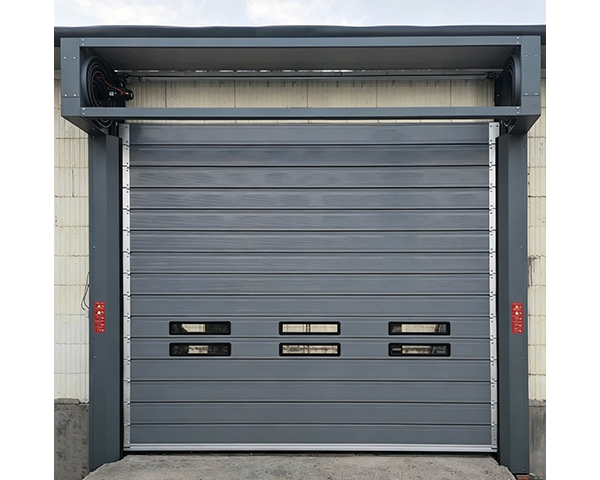
Large warehouse industrial door solutions play a critical role in modern logistics centers, distribution hubs,
fulfillment facilities, cross-docking terminals, and high-volume storage warehouses. In an industry where speed,
safety, energy efficiency, and operational continuity directly affect profitability, the right industrial door
system can improve loading efficiency, reduce air leakage, support secure access control, and help maintain
smooth material flow across the entire supply chain.
This guide provides general industry information only. It is designed for SEO-friendly blog pages, category pages,
and industry landing pages. It covers common warehouse industrial door types, core benefits, technical
specifications, selection factors, installation considerations, maintenance requirements, and application
scenarios. No company-specific recommendations are included.
Large warehouse industrial door solutions refer to heavy-duty door systems engineered for large-scale storage and
logistics environments. These doors are designed to handle frequent opening and closing cycles, wide openings,
vehicle access, temperature control, security demands, and continuous industrial operation.
In logistics centers, industrial doors are not just entry points. They are functional infrastructure components
that support dock operations, warehouse zoning, traffic control, climate separation, fire safety, and security.
A well-selected industrial door system can improve loading dock throughput, reduce downtime, and contribute to a
more efficient supply chain.
Common large warehouse industrial door solutions include sectional overhead doors, high-speed doors, roller
shutters, sliding doors, PVC rapid roll doors, insulated dock doors, and fire-rated industrial doors. Each type
serves a different operational need, depending on opening size, usage frequency, environmental conditions, and
performance requirements.
Logistics centers depend on fast-moving goods, large vehicles, and precise scheduling. Doors at receiving bays,
dispatch zones, internal partitions, and storage areas must support rapid operation without compromising safety or
efficiency. The right warehouse door solution helps reduce bottlenecks and supports better workflow management.
The main reasons industrial doors matter include:
Industrial doors for logistics centers are engineered to open and close quickly and reliably. This reduces waiting
time for trucks, forklifts, and staff, improving loading dock efficiency and warehouse throughput. In high-volume
operations, even small gains in door cycle speed can translate into measurable productivity improvements.
Large warehouse doors can significantly affect heating and cooling costs. Poorly insulated or slow-closing doors
allow conditioned air to escape and outside air to enter. Insulated industrial doors and high-speed doors help
reduce energy loss and support more stable internal temperatures.
Logistics centers often store valuable inventory, packaging materials, and equipment. Heavy-duty warehouse doors
provide a physical barrier against unauthorized entry, theft, and damage. Security can be enhanced with locking
systems, access control integration, reinforced panels, and automated closing functions.
Industrial door systems support safe traffic separation and reduce collision risk in busy warehouses. Safety
sensors, photo eyes, motion detectors, safety edges, and emergency release systems can be added to reduce
accidents involving workers, pallet jacks, forklifts, and delivery vehicles.
In warehouses handling food products, pharmaceuticals, textiles, electronics, or sensitive materials, reducing
dust and contamination is important. Rapid-closing doors and sealed industrial doors help create cleaner zones
and protect inventory quality.
Large warehouse industrial doors can help reduce noise transfer between zones, especially in mixed-use logistics
facilities where packing, sorting, shipping, and storage occur in adjacent areas.
Selecting the right industrial door solution depends on opening size, operation frequency, insulation needs, and
the type of logistics activity. Below are the most common options used in warehouse and logistics environments.
| Door Type | Best Use Case | Main Advantages | Typical Considerations |
|---|---|---|---|
| Sectional Overhead Door | General warehouse loading bays and internal access points | Good insulation, durable construction, space-saving vertical opening | Requires overhead clearance and regular maintenance |
| High-Speed Door | High-traffic logistics areas and internal climate zones | Rapid cycle time, energy savings, better workflow efficiency | Higher initial cost, may need advanced controls |
| Roller Shutter Door | External warehouse security and compact spaces | Space-saving, strong security, suitable for large openings | Less insulation than some sectional doors unless specially designed |
| PVC Rapid Roll Door | Internal separation and fast access zones | Lightweight, fast, flexible, easy to integrate | Usually lower security and impact resistance |
| Sliding Industrial Door | Wide openings and special warehouse layouts | Useful for very large spans, simple operation | Needs side clearance and proper track design |
| Fire-Rated Industrial Door | Fire compartmentation and compliance zones | Helps protect people and assets, supports fire safety strategy | Must meet specific fire code requirements |
Sectional overhead doors are among the most widely used warehouse industrial door solutions. They open vertically
and move under the ceiling, maximizing driveway access while preserving floor space. These doors are commonly
used at loading docks, warehouse entrances, and service access points.
Their panel construction can be customized with insulation layers, vision panels, seals, and surface finishes.
Sectional doors are often chosen for logistics centers that need a balance of durability, thermal performance,
and controlled access.
Typical advantages include:
High-speed doors are designed for rapid opening and closing cycles, making them ideal for busy logistics centers
where traffic is constant. They are often used to separate internal zones, maintain climate control, and reduce
air exchange between areas.
These doors are especially useful in cold storage, clean areas, packaging zones, and cross-docking facilities.
Their speed helps minimize downtime and supports more efficient movement of goods and people.
Key features often include:
Roller shutter doors are popular in industrial and logistics settings because they combine compact storage with
strong physical protection. When opened, the curtain rolls into a compact coil above the opening, freeing space
on both sides of the doorway.
They are commonly used at external entry points, secure storage areas, and facilities where vandal resistance and
access control are priorities. Roller shutter systems can be manually operated or motorized for higher efficiency.
Advantages include:
Sliding industrial doors are used where very wide openings or special architectural conditions require lateral
movement instead of vertical lifting. They can be ideal for large warehouses, aircraft-related logistics, oversized
cargo spaces, and facilities with structural limitations above the opening.
These doors can be designed as single-slide or multi-panel systems. They are valued for their simplicity, width
flexibility, and suitability for large-scale industrial openings.
PVC rapid roll doors are lightweight industrial door solutions that provide quick access and zone separation. They
are often installed inside logistics centers to divide working areas, reduce temperature loss, and manage traffic
between different warehouse sections.
They are a practical choice for high-frequency movement where heavy security is not the main concern. Their quick
response and flexible curtain material make them effective for internal logistics flow.
Fire-rated industrial doors are designed to help contain fire and smoke within defined compartments. In large
warehouse industrial door planning, these doors are essential for supporting compliance with fire safety
regulations and protecting evacuation routes, inventory, and adjacent operational zones.
Fire-rated doors may be required in specific areas depending on building code, facility layout, and risk profile.
They can be integrated into automated systems and may close automatically in emergency conditions.
When evaluating large warehouse industrial door solutions, decision-makers typically compare performance,
durability, safety, and maintenance requirements. Below are the most important features to consider.
| Feature | Why It Matters | Common Options |
|---|---|---|
| Opening Size | Must match vehicle access, pallet flow, and equipment clearance | Standard, oversized, custom width/height |
| Cycle Frequency | Determines suitability for high-traffic operations | Low, medium, high-cycle-rated systems |
| Insulation Value | Impacts energy consumption and temperature stability | Single skin, insulated panels, thermal seals |
| Wind Resistance | Important for external warehouse doors in exposed locations | Reinforced guides, wind bars, heavy-duty tracks |
| Safety Systems | Reduces risk of injury and property damage | Photo eyes, safety edges, sensors, emergency stop |
| Automation | Improves speed and reduces manual labor | Push button, remote control, radar, access control integration |
| Material Durability | Supports long service life in harsh industrial environments | Steel, aluminum, insulated panels, reinforced PVC |
Industrial door specifications can vary widely depending on application and manufacturer design. The table below
provides general industry ranges often considered for logistics center planning.
| Specification | Typical Industry Range | Notes |
|---|---|---|
| Door Width | Approx. 2,500 mm to 6,000+ mm | Custom widths are common for large warehouse openings |
| Door Height | Approx. 2,500 mm to 5,500+ mm | Higher openings may be needed for trucks and forklifts |
| Opening Speed | Varies by type; high-speed doors can open in seconds | Speed affects energy control and workflow efficiency |
| Operation Cycles | From light-duty to very high-frequency use | Cycle rating should match logistics intensity |
| Panel Thickness | Commonly insulated or reinforced depending on use | Thermal performance increases with thicker insulated panels |
| Operating Mode | Manual, semi-automatic, fully automatic | Automation is common in modern logistics centers |
| Safety Protection | Sensors, edges, stop controls, light curtains | Specific systems depend on regulatory and site requirements |
| Surface Finish | Painted steel, coated aluminum, PVC curtain, insulated panel | Finish should suit environment and maintenance needs |
Choosing the right door for a logistics center requires a careful review of operational goals, building layout,
temperature conditions, traffic patterns, and maintenance capacity. A door that works well for a small warehouse
may not be suitable for a high-volume distribution center.
Start by identifying whether the door will be used for external access, loading docks, internal zone separation,
climate control, fire protection, or security. Each application may require a different door type and feature set.
High-cycle environments need durable, fast-operating doors. Lower-frequency access points may prioritize security
or insulation over speed. Understanding traffic volume helps determine the best industrial door solution.
Warehouses in cold climates, humid areas, dusty environments, or wind-exposed sites may need special sealing,
insulation, corrosion resistance, or wind load reinforcement.
Ceiling height, side clearance, and available headroom all affect door selection. Vertical-lift, overhead, sliding,
and roll-up designs each require different installation space.
Safety features are essential in industrial settings. Door systems should support operational safety, emergency
access, and any applicable fire, building, or workplace regulations.
The lowest purchase price is not always the best value. Consider energy savings, repair frequency, downtime risk,
replacement parts, and long-term maintenance when comparing options.
Large warehouse industrial door solutions are used across many logistics and supply chain sectors. Their
flexibility makes them suitable for a wide range of industrial facilities.
| Application Area | Common Door Needs | Primary Goal |
|---|---|---|
| Distribution Centers | High-speed access, dock doors, secure external entry | Maximize throughput |
| Cold Storage Warehouses | Thermal insulation, fast closing, air seal protection | Maintain temperature control |
| Cross-Docking Facilities | Rapid operation, durable traffic-rated doors | Support continuous flow |
| Fulfillment Centers | Fast access, internal zoning, automation | Improve picking and shipping speed |
| Manufacturing Warehouses | Security, dust control, large clear openings | Protect operations and materials |
| Food and Beverage Logistics | Hygiene-friendly surfaces, climate separation | Support product quality |
| Pharmaceutical Storage | Controlled access, clean separation, reliable sealing | Maintain compliance and integrity |
Materials affect performance, durability, insulation, and appearance. Common industrial door materials include
steel, aluminum, PVC, and insulated composite panels. The best choice depends on whether security, weight,
corrosion resistance, or thermal performance is the main priority.
| Material | Main Benefits | Common Uses |
|---|---|---|
| Steel | Strong, secure, durable | External warehouse doors, security doors, heavy-duty systems |
| Aluminum | Lightweight, corrosion-resistant, modern appearance | Sectional doors, vision panels, medium-duty warehouse doors |
| PVC | Flexible, fast, lightweight | High-speed internal doors, rapid roll doors |
| Insulated Composite Panels | Thermal efficiency, structural rigidity | Cold storage, climate-controlled logistics centers |
Modern warehouse industrial door solutions often include automation for better performance and lower labor input.
Automation can improve speed, reduce human error, and support safer traffic management in busy logistics centers.
Common automation and control options include:
Safety is a top priority in industrial and logistics environments. Door systems should reduce the risk of injury,
equipment damage, and operational disruption. Safety devices are especially important where forklifts, pallet
trucks, and pedestrians share the same space.
| Safety Feature | Purpose |
|---|---|
| Photo Eyes | Detect movement or obstruction in the door path |
| Safety Edge | Stops or reverses the door if contact occurs |
| Warning Lights | Alert workers and drivers before movement |
| Emergency Stop | Allows immediate halt during unsafe conditions |
| Manual Release | Supports operation during power loss or emergency situations |
| Interlocks | Prevent unsafe door operation with adjacent equipment |
Proper installation is essential for long service life and reliable operation. Industrial doors must be aligned,
sealed, secured, and tested carefully to ensure they perform as intended under real warehouse conditions.
Important installation factors include structural support, opening dimensions, track or guide placement, power
supply, control wiring, automation integration, and safe commissioning. A poorly installed door may create
unnecessary downtime, noise, sealing problems, or safety risks.
Before installation, facilities teams should confirm:
Large warehouse industrial door systems require routine maintenance to ensure dependable operation. Preventive
maintenance reduces breakdowns, extends product life, and helps maintain safe working conditions.
Typical maintenance tasks include:
Maintenance frequency depends on usage intensity. High-traffic logistics centers should schedule inspections more
often than low-cycle warehouse locations.
Energy efficiency is an increasingly important topic in warehouse and logistics design. Since large openings can
become major sources of energy loss, industrial doors are often selected specifically to reduce heating and
cooling waste.
Sustainable warehouse door solutions may contribute to lower utility bills and improved building performance by
supporting:
For content planning and search visibility, the following keyword themes are commonly associated with this topic:
These keyword phrases can be used naturally throughout blog articles, service pages, category pages, and industry
landing pages. For best SEO performance, maintain clear headings, useful tables, and detailed content that answers
real user questions.
The best door depends on the application. High-speed doors are ideal for rapid internal traffic, sectional
overhead doors are common for loading docks, and roller shutters are often used for security and space efficiency.
Yes, insulated warehouse doors can reduce energy loss, improve temperature control, and help lower HVAC costs,
especially in climate-controlled logistics centers and cold storage facilities.
High-speed industrial doors are often preferred in high-traffic areas because they minimize waiting time and help
maintain workflow efficiency.
Yes, most modern industrial doors can be automated with sensors, remote control systems, access devices, and
control panels for safer and more efficient operation.
Maintenance frequency depends on usage. Busy logistics centers should inspect industrial doors regularly, with
preventive service scheduled according to cycle volume and environmental conditions.
Large warehouse industrial door solutions are essential for efficient logistics center operations. The right door
system improves workflow, supports security, enhances safety, reduces energy loss, and helps maintain consistent
performance in demanding industrial environments. From sectional overhead doors and high-speed doors to roller
shutters, sliding systems, and fire-rated doors, each solution serves a specific role in warehouse design and
operation.
When planning industrial doors for logistics centers, decision-makers should evaluate opening size, traffic
frequency, insulation requirements, safety features, automation options, and long-term maintenance needs. A
carefully chosen warehouse industrial door solution can support smoother operations, lower operating costs, and
better building performance over time.
If you are creating an industry page, blog post, or product-category introduction, this content structure provides
a strong SEO foundation with keyword-rich headings, tables, and practical information suitable for search engine
indexing.
```
Thẩm Dương Manlong Metal Products Co., Ltd.


Bản quyền © 2026 Thẩm Dương Manlong Metal Products Co., Ltd. Bảo lưu mọi quyền Ứng dụng
Trang web này sử dụng cookie để đảm bảo bạn có được trải nghiệm tốt nhất trên trang web của chúng tôi.

 English
 Español
 Portugues
 Pусский
 Français
 Deutsch
 العربية
 ไทย
ไทย Türk dili



 Điện thoại
Bình luận
(0)