

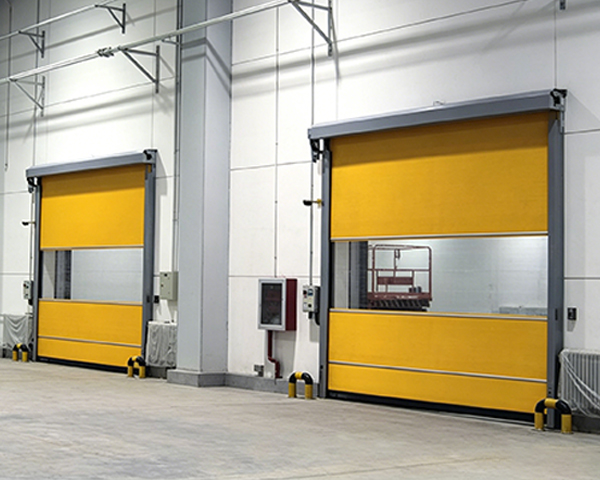
Heavy duty steel industrial doors for high security applications are designed to provide robust protection,
long-term durability, controlled access, and reliable performance in demanding environments. These doors are widely
used in facilities where security, strength, impact resistance, and operational dependability are essential. From
warehouses and factories to utility rooms, government buildings, data centers, and restricted storage areas,
heavy duty steel industrial doors play a critical role in protecting assets, people, and infrastructure.
Unlike standard commercial doors, heavy duty steel industrial doors are engineered with reinforced steel construction,
advanced locking options, enhanced frame systems, and optional fire-rated or insulated cores. Their primary purpose is
to create a strong physical barrier against unauthorized entry, forced intrusion, and environmental stress. For high
security applications, these doors are often selected for their resistance to attack, long service life, and ability
to integrate with access control systems, alarms, and surveillance equipment.
This guide provides industry-standard information on heavy duty steel industrial doors, including definitions, key
benefits, construction details, specification examples, common applications, and selection considerations. The content
is written for SEO-friendly use on blog pages, category pages, product introduction pages, and industry resource pages.
Heavy duty steel industrial doors are high-strength door systems manufactured primarily from steel and reinforced
internal components. They are built to withstand frequent use, physical impact, pressure, and security threats in
industrial and commercial environments. In high security applications, these doors are typically designed with
thicker steel skins, reinforced frames, heavy-duty hinges, stronger locking hardware, and optional security upgrades.
These doors can be used as entry doors, service doors, equipment room doors, emergency access doors, vault-style
enclosures, and secure partition doors. Depending on project requirements, they may be single-leaf or double-leaf,
flush panel or louvered, insulated or non-insulated, fire-rated or non-fire-rated, and manually operated or integrated
with automated access systems.
The phrase heavy duty steel industrial doors for high security applications refers to door solutions
that combine structural strength and protective performance. They are chosen when standard hollow metal doors or light
commercial doors do not provide enough resistance, lifespan, or security level.
Security-sensitive facilities require more than a basic barrier. A high security door must help defend against forced
entry, tampering, environmental damage, and wear from repeated operation. Heavy duty steel industrial doors are
important because they create a reliable physical defense layer between sensitive interiors and external risks.
In industrial and high security settings, these doors help protect:
Their strength and durability also reduce maintenance frequency and replacement costs over time. For facilities with
heavy traffic or strict security needs, this makes steel industrial doors a practical long-term investment.
One of the most important advantages of steel industrial doors is their ability to provide strong resistance against
unauthorized access. Reinforced steel panels, secure frames, and advanced locking systems make forced entry more
difficult. High security applications often require features such as multi-point locking, anti-pry edges, reinforced
strike plates, and tamper-resistant hardware.
Heavy duty steel construction is highly durable and suitable for harsh industrial conditions. These doors can handle
repeated cycles of opening and closing, accidental impact from equipment, and exposure to demanding environments.
They are often preferred in factories, logistics centers, and utility rooms because they maintain structural integrity
over time.
Compared with lighter door materials, steel industrial doors offer longer service life when properly specified and
maintained. Their resistance to warping, cracking, and degradation makes them suitable for high-use facilities where
reliability is essential.
Many heavy duty steel doors can be manufactured with fire-rated construction. This is useful in facilities where fire
separation, compartmentalization, and code compliance are important. Fire-rated steel doors may help protect escape
routes, secure zones, and critical assets during emergencies.
Steel industrial doors can be customized for specific security levels and operational requirements. Options may include
reinforced cores, bullet-resistant construction in specialized projects, vision panels, grilles, louvers, thresholds,
access-control integration, and sound-reduction features.
Heavy duty steel doors typically require less frequent replacement than lower-grade alternatives. Basic maintenance such
as inspection, lubrication, seal replacement, and hardware adjustment is often enough to support long-term performance.
Security doors often need to work with electronic access control systems, including card readers, keypad entry, biometric
systems, alarms, electric strikes, and remote monitoring. Heavy duty steel industrial doors are commonly used in these
integrated environments.
Heavy duty steel industrial doors are suitable for many high security applications across industrial, commercial, and
institutional sectors. Common uses include:
In each case, the door must do more than open and close. It must provide dependable resistance, controlled access, and
performance under pressure.
Heavy duty steel industrial doors are built using a combination of materials and structural elements that support
security and performance. Although designs vary by manufacturer and specification, common construction features include:
| Component | Typical Description | Purpose |
|---|---|---|
| Door Face | Steel sheets or panels in varying thicknesses | Provides the primary outer barrier and impact resistance |
| Core Material | Mineral core, honeycomb core, insulated core, or reinforced solid fill | Improves strength, thermal performance, sound reduction, or fire resistance |
| Frame | Reinforced steel frame with welded or knock-down construction | Supports the door leaf and improves security performance |
| Hinges | Heavy-duty ball-bearing or security hinges | Handles high-frequency operation and load-bearing requirements |
| Locking Hardware | Deadbolts, mortise locks, panic hardware, multi-point locks | Controls access and resists forced entry |
| Seals | Perimeter seals, smoke seals, or acoustic seals | Enhances environmental control, fire protection, and noise reduction |
| Threshold | Steel, aluminum, or reinforced threshold systems | Improves sealing and entry resistance |
| Finish | Powder coating, primer, galvanized finish, or custom paint | Protects against corrosion and improves appearance |
Steel thickness is one of the most important considerations when selecting heavy duty steel industrial doors. Thicker
steel generally increases resistance to impact and intrusion, although overall security also depends on frame strength,
hardware quality, installation method, and lock type.
In industrial door design, the gauge or thickness of the steel skin can vary depending on performance requirements. A
higher level of security usually involves stronger steel panels, reinforced door edges, and more substantial frame
construction. For high security applications, the goal is to create a complete door assembly, not just a strong door
leaf.
It is important to understand that a door’s security level is determined by the entire system. Even a thick steel door
can become weak if it is installed in a poorly reinforced frame or paired with low-grade hardware. That is why complete
specification and professional installation are essential.
Single-leaf steel doors are common for personnel access, restricted rooms, and secure internal entries. They are widely
used because they are efficient, durable, and easy to integrate with access control systems.
Double-leaf doors are used where wider openings are required for equipment, material movement, or emergency access.
These doors are often chosen for warehouses, loading zones, and industrial service entries.
Fire-rated steel industrial doors are designed to help slow the spread of fire and smoke. They are commonly specified
for code compliance in high-risk or compartmentalized facilities.
Insulated doors help control temperature, reduce energy loss, and improve acoustic performance. They are ideal for
cold storage, climate-sensitive rooms, and areas requiring thermal separation.
Some applications require visibility without sacrificing protection. Vision panels made from reinforced or safety-rated
glazing allow observation while maintaining security standards.
Louvered designs support airflow in mechanical or electrical rooms while still providing a strong steel barrier. These
are often used where ventilation is required.
High security steel doors may include several advanced features depending on the facility’s risk profile. Common
security enhancements include:
The selection of security features should always match the threat level and operational requirements of the site. A
strong door assembly can help deter intrusion, delay unauthorized access, and provide time for response.
While security is the main focus, heavy duty steel industrial doors also support other performance goals. These may
include:
| Performance Area | Benefit | Typical Use Case |
|---|---|---|
| Impact Resistance | Helps withstand carts, tools, and equipment contact | Warehouses and plants with heavy traffic |
| Thermal Control | Reduces heat transfer and energy loss | Climate-controlled or insulated spaces |
| Acoustic Control | Helps reduce noise transmission | Machine rooms and urban facilities |
| Fire Separation | Supports compartmentalization in the event of fire | Critical infrastructure and code-regulated areas |
| Weather Resistance | Protects against wind, moisture, and temperature variation | Exterior industrial openings |
Choosing the right steel industrial door requires a careful review of security needs, operational frequency, building
code requirements, and environmental conditions. Important selection factors include:
Identify the level of protection required. Some facilities need basic controlled access, while others require
high-security barriers with reinforced hardware and anti-tamper features.
The opening dimensions and traffic type will determine whether a single or double door is needed. Consider whether
the door must allow personnel only or also accommodate equipment and carts.
Local building codes may require fire ratings, panic hardware, egress compliance, or accessibility standards. The door
should be selected to meet all applicable regulations.
Exterior exposure, humidity, chemical contact, and temperature changes all influence the choice of finish, insulation,
seals, and corrosion protection.
High-traffic doors require stronger hinges, durable hardware, and construction that can handle repeated use without
premature wear.
If the door must work with access control, alarms, cameras, intercoms, or automated operators, these needs should be
included in the initial specification.
A door installed in a hard-to-access location should be easy to inspect and maintain. Choosing quality hardware and
finishes helps reduce downtime and service costs.
The following table provides a general specification example for heavy duty steel industrial doors used in high
security applications. Actual specifications vary depending on project needs and regional standards.
| Specification Category | Typical Range or Option | Notes |
|---|---|---|
| Material | Steel | Primary material for strength and security |
| Door Type | Single-leaf / double-leaf | Selected based on opening size and access needs |
| Core | Honeycomb, mineral, insulated, reinforced solid | Impacts strength, fire rating, and thermal performance |
| Steel Gauge | Varies by design and security level | Thicker steel generally improves resistance |
| Frame | Reinforced steel frame | Critical for overall security performance |
| Finish | Primer, powder coat, galvanized, custom paint | Choose based on environment and aesthetics |
| Fire Rating | Optional, project-specific | Must comply with local regulations when required |
| Insulation | Optional insulated core | Useful for thermal or acoustic control |
| Hardware | Heavy-duty hinges, locks, closers, panic devices | Selected according to security and code needs |
| Access Control | Compatible with electronic access systems | Suitable for modern security management |
| Application | Industrial, commercial, institutional, secure rooms | Broad use across high-demand facilities |
Proper maintenance is essential for preserving the performance of heavy duty steel industrial doors. Even the most
secure door system needs regular inspection and adjustment to remain effective. Recommended maintenance practices
include:
Preventive maintenance helps reduce downtime, improve safety, and extend the usable life of the door system. In high
security environments, routine inspection is especially important because a minor hardware issue can create a major
security weakness.
Installation quality is just as important as product quality. A heavy duty steel industrial door must be installed with
precision to function as intended. The frame must be properly anchored, the door must be aligned, and the hardware must
be suited to the load and usage level.
Key installation considerations include:
Poor installation can reduce security performance, increase wear, and create operational problems. For high security
applications, installation should be handled by qualified professionals familiar with industrial steel door systems.
The steel door finish affects both appearance and performance. Common finish options include:
| Finish Type | Primary Benefit | Best For |
|---|---|---|
| Primer Finish | Basic protection and paint readiness | Interior projects and custom finishing |
| Powder Coating | Durable, attractive, corrosion-resistant finish | High-traffic and exterior environments |
| Galvanized Steel | Improved corrosion resistance | Moist or harsh industrial areas |
| Custom Painted Finish | Branding and design flexibility | Commercial and institutional applications |
| Stainless or Specialized Coating | Enhanced resistance to corrosion or contaminants | Food, chemical, or clean environments |
Heavy duty steel industrial doors are often searched using a variety of related industry keywords. Including these
terms naturally in page content can help improve topical relevance and search visibility:
These keywords should be used in a natural way within headings, body content, tables, and FAQ sections where relevant.
Search engines generally favor content that is informative, structured, and aligned with real user intent.
A high security steel industrial door typically includes reinforced construction, strong frames, secure locking hardware,
tamper resistance, and compatibility with access control systems. The complete door assembly, not only the leaf, must
support the required security level.
No. Heavy duty steel industrial doors are used both indoors and outdoors. They are common in interior secure rooms,
equipment enclosures, utility spaces, and exterior entrances where strength and access control are important.
Yes. Many steel industrial doors are available in fire-rated configurations. These are selected based on building
codes, compartmentation requirements, and project specifications.
Yes. Insulated steel industrial doors are available for applications that require thermal protection, energy efficiency,
or acoustic control.
Common hardware includes heavy-duty hinges, deadbolts, mortise locks, panic devices, closers, electric strikes, and
access control devices such as card readers or keypad systems.
Heavy duty steel industrial doors for high security applications are essential door systems for facilities that require
strength, durability, access control, and long-term performance. Built from reinforced steel and equipped with secure
hardware, these doors help protect people, assets, and critical operations across industrial, commercial, and
institutional environments.
Their advantages include high security protection, fire-rated options, low maintenance needs, impact resistance, and
compatibility with modern security systems. By understanding construction features, specification options, and
installation requirements, facility planners and building managers can choose the right steel industrial door solution
for demanding high security needs.
If your project requires a secure, durable, and code-conscious barrier, heavy duty steel industrial doors remain one of
the most reliable and versatile choices available in the industrial door market.
```
Thẩm Dương Manlong Metal Products Co., Ltd.


Bản quyền © 2026 Thẩm Dương Manlong Metal Products Co., Ltd. Bảo lưu mọi quyền Ứng dụng
Trang web này sử dụng cookie để đảm bảo bạn có được trải nghiệm tốt nhất trên trang web của chúng tôi.

 English
 Español
 Portugues
 Pусский
 Français
 Deutsch
 العربية
 ไทย
ไทย Türk dili



 Điện thoại
Bình luận
(0)