

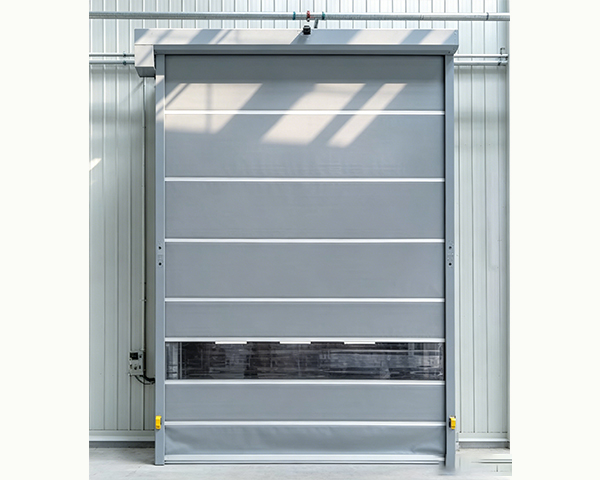
Flexible gate energy saving and environmental control is a modern industrial and commercial access-control concept designed to improve
temperature stability, reduce energy loss, support cleaner work environments, and optimize traffic flow between separate indoor or semi-enclosed
spaces. It is widely used in warehouses, logistics centers, manufacturing facilities, food processing plants, cold storage areas, distribution
hubs, clean zones, and other buildings where controlled separation between environments is important.
In simple terms, a flexible gate acts as a controllable barrier that can open and close quickly, creating a temporary passage while minimizing
air exchange, dust infiltration, humidity loss, and unwanted heat transfer. When combined with energy-saving design principles and environmental
control strategies, the flexible gate becomes more than a passage solution. It becomes a practical tool for reducing operating costs,
improving workflow, and maintaining indoor environmental quality.
This page provides a complete SEO-friendly overview of flexible gate energy saving and environmental control, including definitions, core
functions, benefits, application scenarios, technical specifications, performance considerations, selection criteria, and a structured comparison
table. The following content is written for industry pages, blog sections, catalog pages, and internal knowledge bases that need original,
keyword-rich, and Google-friendly content.
Flexible gate energy saving and environmental control refers to the use of flexible barrier systems to manage the physical separation between
different areas while reducing energy consumption and maintaining controlled environmental conditions. The term “flexible gate” generally
describes a gate, curtain, partition, or barrier system that is not rigid like a traditional wall or fixed door. Instead, it is designed to
move, fold, roll, swing, or retract in a way that allows frequent access without sacrificing environmental efficiency.
These systems are commonly engineered to help businesses preserve heating, cooling, refrigeration, cleanliness, pressure balance, and air quality.
They are especially useful where repeated movement of people, forklifts, carts, or materials would otherwise cause unnecessary energy loss.
From an energy-saving perspective, flexible gate systems reduce the volume and duration of open exposure between zones. From an environmental
control perspective, they help limit airflow, dust, odors, moisture, insects, noise, and other contaminants. When properly installed, they can
support both operational efficiency and compliance with environmental control standards.
Energy efficiency is a major concern in modern facilities. Every time an opening remains unsealed, conditioned air can escape and unconditioned
air can enter. This increases HVAC loads, cooling costs, heating demand, and in some cases refrigeration losses. A flexible gate reduces the
time and intensity of that exchange.
In many industrial environments, doors are opened dozens or hundreds of times per day. If each opening causes significant air leakage,
the accumulated cost can be substantial. Flexible gate energy saving solutions are designed to minimize this problem by creating a faster,
more adaptable, and more controlled transition between areas.
In addition to direct energy savings, these systems can also improve comfort for workers, stabilize sensitive processes, and extend the life
of HVAC equipment by reducing repeated temperature fluctuations.
Environmental control is a broad term that includes the management of temperature, humidity, airflow, cleanliness, and contamination levels.
Flexible gate systems contribute to environmental control in several ways:
These functions are valuable in sectors where product quality, sanitation, worker comfort, and compliance standards depend on a more controlled
indoor environment.
Flexible gate solutions offer a wide range of practical and financial benefits. Below are the most important advantages for industry users.
| Advantage | Description | Typical Impact |
|---|---|---|
| Reduced energy loss | Minimizes air exchange between conditioned and unconditioned spaces | Lower heating and cooling costs |
| Better temperature control | Supports thermal separation between different zones | Improved indoor stability |
| Improved hygiene | Helps limit dust and airborne contamination | Cleaner working environment |
| Faster traffic flow | Allows frequent passage of workers and equipment | Higher productivity |
| Enhanced comfort | Reduces drafts and temperature shocks near access points | Better employee experience |
| Lower equipment strain | Decreases HVAC cycling and environmental fluctuations | Potentially longer system life |
| Flexible installation | Can be adapted to many facility layouts and opening types | Broader application range |
Flexible gate energy saving and environmental control solutions can take different forms depending on the site, opening size, frequency of use,
and environmental goals. The most common types include the following.
| Type | Structure | Main Use |
|---|---|---|
| Flexible strip curtains | Overlapping transparent or semi-transparent strips | Warehouses, cold rooms, loading areas |
| Roll-up flexible gates | Retractable curtain-style barrier | High-traffic access points |
| Sliding flexible gates | Movable panel or fabric barrier on a track | Large openings and controlled zones |
| Accordion-style gates | Foldable barrier that opens compactly | Space-saving separation |
| High-speed flexible doors | Motorized fast-opening curtain gate | Facilities requiring frequent cycling |
| Soft PVC barrier gates | Flexible material used for separation | Dust, airflow, and temperature control |
Sustainable facility design is no longer limited to insulation, lighting, and HVAC selection. Modern building efficiency also depends on how
spaces are connected and how often conditioned air is lost through access points. Flexible gate energy saving and environmental control
solutions are a practical part of sustainable design because they reduce waste without requiring major structural changes.
By improving zoning, controlling airflow, and reducing the workload of mechanical systems, flexible gates can support lower operational
emissions and better resource management. For facilities seeking more environmentally responsible operations, these systems can be an
effective and relatively low-complexity upgrade.
Flexible gate systems are used across many industries. Their value increases in environments where repeated access, thermal separation, or
cleanliness requirements are important. Typical applications include:
Not all flexible gate systems deliver the same level of energy efficiency. Performance depends on several technical and operational factors.
| Performance Factor | Why It Matters | Effect on Energy Saving |
|---|---|---|
| Opening frequency | More openings increase the challenge of maintaining environmental separation | Higher cycle efficiency becomes more important |
| Opening size | Larger openings allow more air exchange if not controlled properly | Requires stronger barrier performance |
| Material thickness | Thicker or denser materials often improve insulation and containment | Can reduce heat transfer and drafts |
| Sealing quality | Edges, overlaps, and closure alignment affect leakage | Improves air retention and control |
| Opening speed | Faster opening and closing reduces exposure time | Less conditioned air loss |
| Traffic type | Forklifts, carts, and pedestrians create different environmental disruption levels | Determines ideal gate design |
| Maintenance condition | Wear, damage, or misalignment can reduce performance | Regular maintenance preserves savings |
The materials used in flexible gate systems have a direct impact on durability, transparency, cleaning, insulation, and overall environmental
control performance. Common material options include:
| Material | Properties | Best For |
|---|---|---|
| PVC | Flexible, durable, cost-effective, easy to clean | General industrial use |
| Polyethylene | Lightweight, flexible, moisture resistant | Basic separation and protection |
| Polycarbonate | Strong, impact-resistant, more rigid than film materials | High-durability applications |
| Insulated composite materials | Improved thermal resistance and environmental stability | Cold storage and energy-sensitive zones |
| Antistatic materials | Designed to reduce static charge buildup | Electronics and sensitive manufacturing |
| Transparent strip materials | Allow visibility while maintaining separation | Traffic control and safety monitoring |
The following specification table provides a general reference for industry readers. Actual values vary by design, size, installation method,
and environmental requirements.
| Specification Item | Typical Range or Description |
|---|---|
| Gate type | Strip curtain, roll-up, sliding, accordion, high-speed flexible door |
| Material thickness | Varies by application; commonly light, medium, or heavy-duty grades |
| Temperature resistance | Depends on material selection and operating environment |
| Visibility level | Transparent, semi-transparent, or opaque |
| Opening method | Manual, semi-automatic, or automatic |
| Closure speed | Standard to high-speed operation depending on model |
| Sealing design | Overlap, side seal, bottom seal, brush seal, or combination system |
| Maintenance requirement | Low to moderate, depending on moving parts and traffic frequency |
| Environmental target | Energy saving, dust control, humidity control, odor control, pressure control |
| Primary use environment | Industrial, commercial, logistics, cold storage, clean zones |
Businesses often compare flexible gate solutions with traditional fixed doors, walls, or rigid partitions. Each has its role, but flexible
systems offer unique advantages when frequent access and environmental control must work together.
| Feature | Flexible Gate | Traditional Fixed Barrier |
|---|---|---|
| Access frequency | Well suited for frequent movement | Less efficient for repeated entry and exit |
| Environmental separation | Good to excellent depending on design | Excellent when fully closed, but less adaptable |
| Energy saving | Strong when openings are frequent | May lose efficiency due to slow operation |
| Installation flexibility | High | Usually lower |
| Visibility | Often transparent or semi-transparent | Depends on material choice |
| Maintenance | Usually straightforward | May require structural maintenance |
| Space efficiency | Often compact and adaptable | Can require more permanent space |
Choosing the right flexible gate requires a clear understanding of the site conditions and operational needs. The best selection is usually
based on the following criteria:
energy saving, or a combination of factors.
Proper installation is essential for achieving the expected energy-saving result. Even a well-designed flexible gate can underperform if it is
poorly mounted or incorrectly aligned. Important installation considerations include:
In energy-sensitive environments, installation precision can directly influence long-term operating costs. Better sealing and smoother operation
usually lead to better results.
Flexible gate energy saving and environmental control systems are generally low maintenance, but regular inspection helps preserve performance.
Common maintenance practices include:
Regular maintenance extends the service life of the gate and helps maintain stable environmental control over time.
For blog pages, category pages, and industry landing pages, the following keyword themes are highly relevant:
The main purpose of a flexible gate is to provide controlled access while reducing energy loss and supporting environmental separation between
different areas.
Yes. By limiting air exchange and helping maintain stable indoor conditions, flexible gates can reduce heating and cooling demand in many
facilities.
Yes. Flexible gate energy saving solutions are especially useful in cold storage because they help preserve low temperatures and reduce
refrigeration strain.
They can help reduce dust, debris, and airborne contamination by limiting open exposure between zones.
No. They are used in industrial, commercial, agricultural, and controlled-environment applications depending on the design and material
selection.
Flexible gate energy saving and environmental control is an effective approach for facilities that need frequent access without sacrificing
environmental stability. By reducing air loss, supporting temperature control, improving hygiene, and increasing operational flexibility,
flexible gates deliver practical value across many industries.
Whether the goal is to improve energy efficiency, manage dust and humidity, protect sensitive processes, or optimize traffic flow, a well-chosen
flexible gate system can play an important role in modern facility management. For businesses looking to balance productivity, sustainability,
and environmental control, flexible gate solutions remain a highly relevant and scalable option.
```
Thẩm Dương Manlong Metal Products Co., Ltd.


Bản quyền © 2026 Thẩm Dương Manlong Metal Products Co., Ltd. Bảo lưu mọi quyền Ứng dụng
Trang web này sử dụng cookie để đảm bảo bạn có được trải nghiệm tốt nhất trên trang web của chúng tôi.

 English
 Español
 Portugues
 Pусский
 Français
 Deutsch
 العربية
 ไทย
ไทย Türk dili



 Điện thoại
Bình luận
(0)